Septic tank pumping in Joliet runs 150 to 300 dollars for a standard day-rate service call, based on measured pricing across 4 datapoints. A 1,000 gallon tank typically falls in that range too, though tank size, sludge depth and access all move the number. Weekend service costs more, generally landing between 50 and 150 dollars as an add-on premium.
A standard pump-out for a home in Joliet costs between 150 and 300 dollars on a weekday, with most jobs landing in that band regardless of whether it is a routine cleaning or a slightly overdue tank. That price covers a typical residential septic tank, and per our measured data, four separate service calls confirm this range holds steady across the market, whether you are searching from septic tank pumping cost directly or comparing it against septic pumping service options first. Weekend appointments add a premium, usually falling between 50 and 150 dollars extra, so if your tank backs up on a Saturday before a family gathering, expect to pay toward the higher end. Grease interceptors are a different animal entirely: those get pumped once fats, oils, grease and solids reach 25 percent of the liquid depth, not on a fixed calendar. If you are budgeting for a commercial kitchen instead of a house, check grease trap pumping pricing separately. For homeowners near Crest Hill or Shorewood who share similar tank setups with Joliet properties, the same day-rate band applies since the service itself does not change by zip code. Full septic pumping service calls include the truck, the vacuum work and hauling, not just showing up.
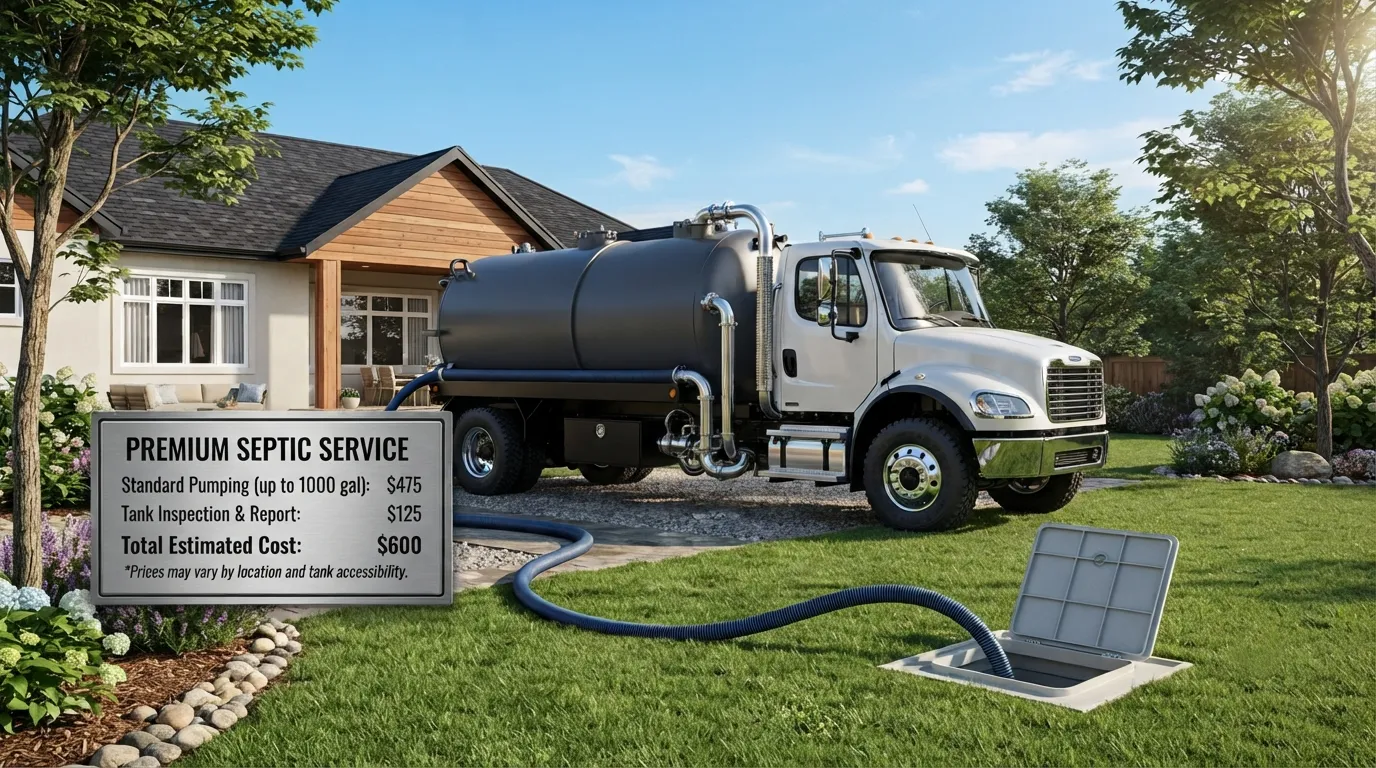
Tank size drives most of the swing you will see in septic tank cleaning prices. A 1,000 gallon tank is the common residential size, and household size plus tank capacity together determine how often it needs attention, typically every 3 to 5 years for a standard home setup. A tank that has gone six or seven years without service, or one serving a larger household, holds more solids and takes longer to clean out properly, which pushes the job toward the top of the 150 to 300 dollar range, similar to how a porta potty rental checklist helps a site plan ahead instead of scrambling. Access matters too. If the tank lid sits under a deck, behind landscaping, or under three feet of Illinois clay that has not been dug out in a decade, expect the crew to spend extra time just getting to it. Emergency calls, like a backup discovered the night before hosting family, fall outside the standard day rate and into service-fee territory, which is why knowing how often to pump a septic tank on a schedule saves money over calling for emergency septic service after something backs up. Catching septic tank warning signs early keeps a routine visit routine, the same way checking a porta potty placement guide early keeps a site from scrambling on delivery day.
The 150 to 300 dollar range exists because "pumping a tank" covers a spread of actual jobs. A tank pumped on schedule with easy lid access is a straightforward call near the low end. A tank that has never been serviced, sits under paving, or has a collapsed baffle takes real extra labor and sometimes extra equipment. Joliet's older neighborhoods often have septic systems installed decades ago, and older tanks and lines are more likely to need extra diagnostic time during the visit, which shows up in the final invoice, much like a dumpster permit requirements check can add time to an older property's project timeline. Homes further out toward New Lenox, roughly 10.9 miles east of Joliet, or Plainfield, about 12.2 miles northwest, sometimes deal with harder ground access or longer driveways, both of which affect a crew's setup time. None of that changes the price band, but it explains why one neighbor pays 160 dollars and another pays closer to 290 for what sounds like the same service. If you are unsure whether your situation is routine or something bigger, a look at septic tank cleaning service details helps set expectations before the truck arrives, the same way an about page or a quick contact call can clarify scope before booking.
A holding tank is a different product entirely, not a cheaper substitute for pumping. Holding tanks get rented for construction sites, events or temporary situations where there is no permanent septic system at all, and they get pumped out on a schedule rather than replacing a home's existing tank. If your property genuinely lacks septic infrastructure, whether it is a remote job site or a temporary setup, holding tank rental is worth comparing against a standard porta potty rental setup instead, especially for short-term work. For an active construction project in Joliet needing full-time sanitation, pairing portable toilet rental with temporary power pole service and construction site services often covers the whole site rather than relying on a holding tank alone. For farms and agricultural operations, OSHA 1928.110 requires potable water, toilets and handwashing within a quarter mile walk of hand-labor employees, one facility per 20 workers, which is a separate compliance question from residential septic pumping. Check farm and agricultural restrooms if that applies to your property, or review OSHA portable toilet requirements for the fuller compliance picture.
Schedule pumping before symptoms show up, not after. Slow drains, gurgling pipes or standing water near the drain field mean the tank is already past due, and by then you are looking at an emergency call instead of a planned 150 to 300 dollar visit. The 3 to 5 year interval is a starting point, not a guarantee, since a larger household or a smaller tank shortens that window. Joliet homeowners who bought older properties without service records should get a baseline inspection rather than guessing. If you are managing multiple properties or a rental portfolio around Joliet, Crystal Lawns just 4.2 miles north, or Romeoville 9.9 miles north, staggering service calls across a known schedule avoids clustering emergency visits in the same month. For anyone comparing this against dumpster or portable restroom costs for a larger property project, dumpster rental cost, porta potty rental cost and monthly porta potty rental pages break down those separate price bands.
A 1,000 gallon tank falls within the standard 150 to 300 dollar day-rate range for septic pumping. Actual cost depends on sludge depth, lid access and how long since the last service. Routine, easy-access tanks land near the lower end of that band.
Most residential tanks need pumping every 3 to 5 years, driven by tank size and household size. A larger family or a smaller tank shortens that interval. Watch for slow drains or odors as early warning signs rather than waiting for a fixed date.
Yes. Weekend service typically adds a premium of 50 to 150 dollars over the standard weekday rate. If your schedule allows it, booking a weekday appointment keeps the cost at the lower end of the standard range.
Septic pumping empties a home's wastewater tank on a multi-year schedule. Grease trap pumping happens once fats, oils, grease and solids hit 25 percent of the liquid depth, which is a commercial kitchen concern, not a residential one, and follows its own service timeline entirely.
Yes, emergency septic situations get handled outside the standard day-rate schedule since they require faster response. A backed-up tank discovered on short notice falls into emergency service rather than routine pumping, and pricing reflects that faster turnaround.
Yes. Joliet Porta Pros delivers septic tank pumping cost across Joliet and the surrounding metro, with same-day and next-day drop-off available on most orders.
Pricing depends on the unit and how long you need it. See our cost breakdown and request a free quote for an exact figure.
Standard rentals include scheduled service — a pump-out, a clean, a restock and fresh deodorizer. Busy or hot-weather sites can be serviced more often.
Call now or request a free quote — clean units, on-time delivery, transparent pricing.